

Academicians
Yongfeng Shang
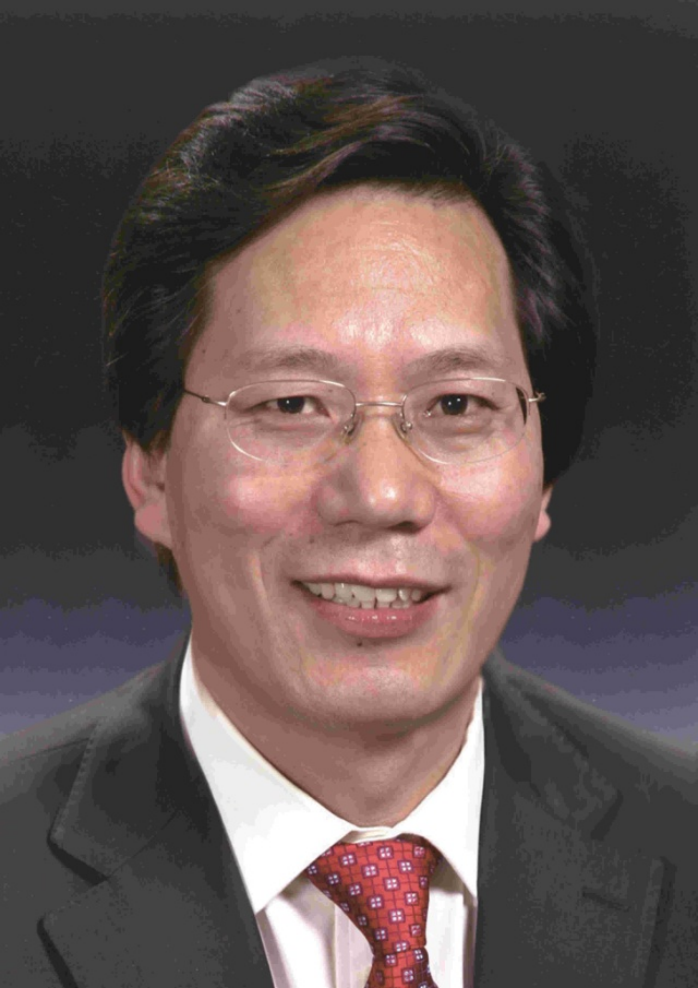
Yongfeng Shang, PhD, Professor, Academician, Chinese Academy of Sciences
Department of Biochemistry and Molecular Biology
Peking University Health Science Center
Contact information
38 Xueyuan Road, Beijing 100191, China
Email: yshang@hsc.pku.edu.cn
Personal Profile
Dr. Shang is a professor and an academician of the Chinese Academy of Sciences. He was awarded the “Cheung Kong Scholar” professorship of the Ministry of Education in 2002 and was the winner of the National Outstanding Youth Science Foundation in 2003. He served as the group leader of the Innovative Group Project of the National Natural Sciences Foundation in 2007. In 2009, he was selected as a national candidate for the “New Century Talents Project” of the Ministry of Human Resources and Social Security, and in 2010, he received the Government Special Allowance of the State Council. In 2009, Dr. Shang was elected as an academician of the Chinese Academy of Sciences. Dr. Shang has organized several international academic conferences and has been invited to give lectures in multiple international conferences. He is currently an Associate Editor for Molecular Cancer and amember of the Editorial Board of several international journals. He has been on the list of highly cited scholars in China for years.
Research of Focus
Dr. Shang’s main research interests include the epigenetic regulation of gene transcription and molecular mechanism of breast/endometrial carcinogenesis. Over the years, he first-authored or corresponded dozens of high-impact papers in journals such as Cell,Nature, Science, Nature Genetics, Cancer Cell, Molecular Cell, Genes & Development, The Journal of Clinical Investigation etc. He was the first to theorize the cyclic binding of estrogen receptors on the promoters of target genes and to develop the mammalian cell-based chromatin immunoprecipitation assay (ChIP).The work, which was published in Cell in 2002, is considered as one of the classical and seminal studies in the field. In 2005, he corresponded a Nature article in which his group explored the molecular mechanisms underlying the tissue specific action of tamoxifen, providing an answer to a long-standing question aboutwhy treatment of breast cancer patients with tamoxifen may lead to rise of endometrial cancer, which may aid the designing of safer drugs for the treatment of endometrial cancer. In 2009, he corresponded a Cell paper in which the epigenetic mechanism of breast cancer metastasis was studied. The work supports the pursuit of histone modifying enzymes as the target for treatment of breast cancer. In 2016, he corresponded a Nature Genetics paper, in which his group linked the pioneer factor FOXA1-associated epigenetic regulation to transcriptional pioneering by FOXA1.Dr. Shang has been invited to write reviews for Nature Reviews Cancer and Annual Review of Physiology.His representative research achievements were rewarded with “Top ten news of basic research in China”, “Top ten scientific and technological advances in Chinese institutions”, the first prize of“Chinese Medical Science and Technology Award”, the first prize of “Natural Science Award of the Ministry of Education” and the second class prize of “National Natural Science Award” (2008, 2016). Dr. Shang has won “Eli Lilly Scientific Excellence Award”,“Ho Leung Ho Lee Foundation Science and Technology Advancement Award”, “Shu-Lan Medicine Award” and the first prize of “Yao Ming Kant prize for life chemistry research”. Two doctoral dissertations under his supervision were awarded as "Chinese Top 100 Excellent Doctoral Dissertations", in 2007 and 2011.