

Department of Immunology
Changtao Jiang
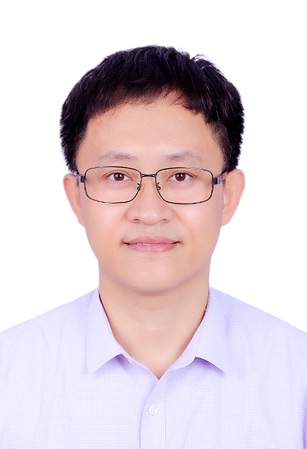
Professor Jiang Changtao
Long-Term Professor & Boya Distinguished Professor, Peking University School of Basic Medical Sciences
Vice Dean | Doctoral Advisor
Recipient of the National Science Fund for Distinguished Young Scholars
Awardee of the Xplorer Prize
Email: jiangchangtao@bjmu.edu.cn
Research Areas:
1. Investigate the evolutionary mechanisms of steroid metabolites and their enzymes in animals in coordination with microorganisms, elucidating the life logic of cross-kingdom metabolic regulation.
2. Decipher the receptors and molecular mechanisms through which microbiota-derived steroid metabolites regulate host metabolism, and develop targeted intervention strategies for diseases.
3. Construct an AI-based technology for mining steroid-metabolizing enzymes to discover novel bioactive steroid metabolites.
Overview:
Professor Jiang Changtao has long been dedicated to research on gut microbiota and host metabolic regulation, establishing a groundbreaking theory on "gut microbiota-derived enzymes and their metabolites cross-kingdom regulation of host metabolic homeostasis and imbalance". His major contributions include:
1. Identifying a series of novel gut microbiota-derived metabolites such as succinylated cholic acid, tryptophan-cholic acid, and an unreported skeleton bile acid named ditail-BA (DTB), constructing an artificial intelligence (AI)-assisted workflow for mining microbial specific synthases, and uncovering orphan receptors including MRGPRE as new bile acid receptors—revealing new targets for metabolic diseases.
2. Establishing an enzyme activity-screening platform for discovering microbial enzymes, proposing the new concept of "gut microbial-host isozymes", and revealing multiple isozymes including microbial DPP4 and nicotine-degrading enzyme NicX, providing new breakthroughs for precision treatment of metabolic disorders.
This body of work focuses on novel microbial metabolite synthases and their direct host receptors, elucidating the "Microbial Enzyme - Metabolite - Host Receptor" regulatory axis, and enabling cross-kingdom precision intervention in metabolic diseases. It carries significant theoretical innovation and commercialization potential.
Professor Jiang has published over 50 papers as corresponding (or co-corresponding) author in top-tier journals including Science (2025a, 2025b, 2023), Cell (2025a, 2025b, 2024), and Nature (2025, 2022), among which 12 were highlighted in dedicated commentaries in journals such as Cell and Science, and 13 were listed as ESI Highly Cited Papers.
He has received numerous prestigious awards, including China's Top 10 Life Science Research Advances (twice), China's Top 10 Science and Technology Advances in Universities, the First Class Prize of the Beijing Natural Science Award, the Xplorer Prize, the Tan Jiazhen Life Science Innovation Award, and the China Youth Science and Technology Award. He has presided over major research programs such as integration project and key project of the National Natural Science Foundation of China, as well as the National Key R&D Program of China. He also serves as Vice President of the Biophysical Society of China, President of the Beijing Society for Immunology, and Editorial Board Member of the journal Cell Metabolism, among other roles.
Representative Publications:
(1) Ding, Y.#, Luo, X. #, Guo, J. #, Xing, B. #, Lin, H. #, Ma, H., Wang, Y., Li, M., Ye, C., Yan, S., Lin, K., Zhang, J., Zhuo, Y., Nie, Q., Yang, D., Zhang, Z., Pang, Y., Wang, K.*, Ma, M.*, Lai, L.* and Jiang, C. T.* (2025). Identification of gut microbial bile acid metabolic enzymes via an AI-assisted pipeline. Cell 188, 6012-6027.
(2) Lin, J. #, Nie, Q. #, Cheng, J. #, Zhong, Y. N. #, Zhang, T. #, Zhang, X. #, Ge, X. #, Ding, Y. #, Niu, C., Gao, Y., Wang, K., Gao, M., Wang, X., Chen, W., Yun, C., Ye, C., Xu, J., Shaoyong, W., Zhang, L., Shang, P., Luo, X., Zhang, Z., Zheng, X., Sha, X., Zhang, J., Nie, S., Zhang, X., Ren, F., Liu, H., Dong, E., Yu, X.*, Ji, L.*, Pang, Y.*, Sun, J.* and Jiang, C. T.* (2025). A microbial amino-acid-conjugated bile acid, tryptophan-cholic acid, improves glucose homeostasis via the orphan receptor MRGPRE. Cell 188, 4530-4548.
(3) Zhou, S.#, Li, M. #, Wang, P. #, Guo, C., Zhang, J., Luo, X., Fan, Y. C., Chen, E. Q., Qi, X., Chen, J., Ye, L., Yuan, H. Y., Yin, W. B., Wang, K.*, Zheng, M. H.*, Pang, Y.*, Qiao, J.*, and Jiang, C. T.* (2025). A symbiotic filamentous gut fungus ameliorates MASH via a secondary metabolite-CerS6-ceramide axis. Science 388, eadp5540.
(4) Nie, Q.#, Luo, X.#, Wang, K.#, Ding, Y.#, Jia, S.#, Zhao, Q., Li, M., Zhang, J., Zhuo, Y., Lin, J., Guo, C., Zhang, Z., Liu, H., Zeng, G., You, J., Sun, L., Lu, H., Ma, M., Jia, Y.*, Zheng, M.*, Pang, Y.*, Qiao, J.* and Jiang, C. T.* (2024). Gut symbionts alleviate MASH through a secondary bile acid biosynthetic pathway. Cell 187, 2717-2734.
(5) Wang, K.#, Zhang, Z.#, Hang, J.#, Liu, J.#, Guo, F.#, Ding, Y., Li, M., Nie, Q., Lin, J., Zhuo, Y., Sun, L., Luo, X., Zhong, Q., Ye, C., Yun, C., Zhang, Y., Wang, J., Bao, R., Pang, Y., Wang, G.*, Gonzalez, F.*, Lei, X.*, Qiao, J.* and Jiang, C. T.* (2023). Microbial-host-isozyme analyses reveal microbial DPP4 as a potential antidiabetic target. Science 381, eadd5787.
(6) Chen, B.#, Sun, L.#, Zeng, G.#, Shen, Z.#, Wang, K.#, Yin, L.#, Xu, F., Wang, P., Ding, Y., Nie, Q., Wu, Q., Zhang, Z., Xia, J., Lin, J., Luo, Y., Cai, J., Krausz, K. W., Zheng, R., Xue, Y., Zheng, M.*, Li, Y.*, Yu, C.*, Gonzalez, F.* and Jiang, C. T.* (2022). Gut bacteria alleviate smoking-related NASH by degrading gut nicotine. Nature 610, 562-568.
(7) Lin, H.#, Ma, C.#, Cai, K.#, Guo, L.#, Wang, X.#, Lv, L.#, Zhang, C.#, Lin, J.#, Zhang, D., Ye, C., Wang, T., Huang, S., Han, J., Zhang, Z., Gao, J., Zhang, M., Pu, Z., Li, F., Guo, Y., Zhou, X., Qin, C., Yi, F., Yu, X.*, Kong, W.*, Jiang, C. T.* and Sun, J.* (2025). Metabolic signaling of ceramides through the FPR2 receptor inhibits adipocyte thermogenesis. Science 388, eado4188.
(8) Zhang, S.#, Lin, H.#, Wang, J.#, Rui, J.#, Wang, T.#, Cai, Z.#, Huang, S.#, Gao, Y., Ma, T., Fan, R., Dai, R., Li, Z., Jia, Y., Chen, Q., He, H., Tan, J., Zhu, S., Gu, R., Dong, Z., Li, M., Xie, E., Fu, Y., Zheng, J.*, Jiang, C. T.*, Sun, J.* and Kong, W.* (2025). Sensing Ceramides by CYSLTR2 and P2RY6 to Aggravate Atherosclerosis. Nature 641, 476-485.
(9) Wu, Q.#, Liang, X.#, Wang, K.#, Lin, J., Wang, X., Wang, P., Zhang, Y., Nie, Q., Liu, H., Zhang, Z., Liu, J., Pang, Y. L., Jiang, C. T.*. (2021) Intestinal hypoxia-inducible factor 2α regulates lactate levels to shape the gut microbiome and alter thermogenesis. Cell Metabolism 33, 1988-2003.
(10) Sun, L.#, Xie, C.#, Wang, G.#, Wu, Y.#, Wu, Q., Wang, X., Liu, J., Deng, Y., Xia, J., Chen, B., Zhang, S., Yun, C., Lian, G., Zhang, X., Zhang, H., Bisson, W. H., Shi, J., Gao, X., Ge, P., Liu, C., Krausz, K. W., Nichols, R. G., Cai, J., Rimal, B., Patterson, A. D., Wang, X., Gonzalez, F. J., Jiang, C. T.*.(2018) Gut microbiota and intestinal FXR mediate the clinical benefits of metformin. Nature Medicine 24, 1919-1929.
Student Supervision:
He has supervised 13 doctoral students, 3 master's students, and 9 postdoctoral fellows to completion. Among them, 14 now hold faculty positions at universities or research institutes such as Peking University, the Chinese Academy of Sciences, and the Chinese Academy of Medical Sciences (including 8 as professors or research fellows, 4 as associate professors or associate research fellows, and 2 as lecturers or assistant research fellows).